Photos About the Environment Being Ruined Art How Nature Is Being Runind
Nosotros humans frequently build roads and bridges, canals and ports, even entire cities at the expense of the environment. But nature isn't planning on giving up. On the opposite, it is determined to persevere, showing simply how fragile our creations are.
Maybe you remember our earlier listing on Mother Nature reclaiming its territories, maybe not, but fourth dimension passes and bricks keep to crumble, so Bored Panda decided to refresh your memory on the topic.
We put together a new batch of photos to prove that nature is a force to be reckoned with and that ultimately, the earth belongs to it. As much every bit we would like to think otherwise.
A cool example of how nature takes back what rightfully belongs to it is Tikal, one of the almost famous remnants of the Maya civilization. When author and journalist Alan Weisman hiked through the surrounding region, he discovered something fascinating on his style: "You lot're walking through this really dense rainforest, and you're walking over hills," Weisman told Live Science. "And the archaeologists are explaining to you that what you're really walking over are pyramids and cities that oasis't been excavated." We know well-nigh sites like Tikal because humans take gone to great efforts to dig upward and restore their remains. Meanwhile, endless other ruins remain subconscious, sealed beneath forest and dirt. "It'due south but amazingly thrilling how fast nature tin can bury us," Weisman said.
This scene from Guatemala's rainforest allows usa a glimpse of what our planet could look like if humans were no more than. Lately, have been getting snippets of this thought, as the global COVID-19 pandemic has kept people inside, encouraging animals to render to our quieter urban environments. Weisman, who wrote The Earth Without United states, spent several years interviewing experts and systematically developing scenarios that would unfold in our planet if we disappeared.
In his research, Weisman started by taking a look at cities, where some of the most dramatic and firsthand changes would occur, cheers to a sudden lack of homo maintenance. Without people to run pumps that divert rainfall and rising groundwater, the subways of huge sprawling cities like London and New York would flood within hours of our disappearance. "[Engineers] have told me that information technology would accept about 36 hours for the subways to flood completely," he said.
Without man oversight, glitches in oil refineries and nuclear plants would go unchecked, likely resulting in massive fires, nuclear explosions, and devastating nuclear fallout. "There's going to be a gush of radiation if suddenly we disappear. And that's a real wildcard, it'due south almost impossible to predict what that'due south going to exercise," Weisman explained. In the wake of our demise, we would as well leave behind mountains of waste matter — much of it plastic, which would likely persist for thousands of years, with huge effects on wild animals.
Persistent organic pollutants (POPs) — human-made chemicals such as PCBs that currently tin can't be cleaved downwardly in nature — would also go out a marking. "Some of these POPs may be around until the stop of time on Globe. In time, however, they volition be safely buried away." The combined rapid and slow release of all the polluting waste we leave behind would undoubtedly have dissentious furnishings on surrounding habitats and wildlife, yet, that doesn't necessarily mean total devastation: one quick look at the rebounding of wildlife at the site of the Chernobyl nuclear disaster shows that nature tin be resilient on short timescales, fifty-fifty under such extremes. Meanwhile, petroleum waste that spills or seeps into the ground at industrial sites and factories would exist broken downward and reused by microbes and plants in just a few decades.
With all that polluting legacy unfolding, water running cloak-and-dagger in cities would corrode the metal structures that hold up the streets above subterranean transport systems, and whole avenues would collapse, transforming suddenly into mid-city rivers, Weisman said. Over successive winters, without our regular de-icing, pavements would crack and provide new niches for seeds to take root — carried on the wind and excreted past overflying birds — and develop into trees that continue the gradual dismemberment of pavements and roads. The aforementioned would happen to bridges. Add some general degradation and these structures could collapse inside a few hundred years.
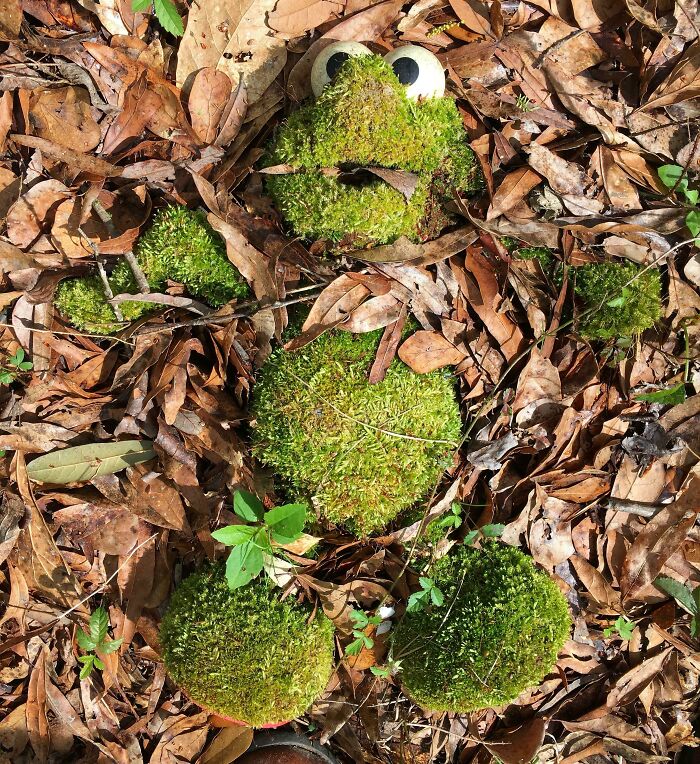
I'one thousand assuming the fabric and padding created a moist coarse surface for the moss to exploit.
With all this fresh new habitat opening up, nature would march in, pasting over the formerly physical jungle with grasslands, shrubbery, and dense stands of trees. Weisman said that would crusade the accumulation of dry organic material, such as leaves and twigs. "Fires are going to create a lot of charred material that volition fall to the street, which is going to be terrific for nurturing biological life. The streets will convert to little grasslands and forests growing upward inside 500 years," he said.
Co-ordinate to Weisman, buildings would dethrone from hundreds of years of harm from erosion and burn. The first to topple would be modernistic glass and metallic structures that would shatter and rust. On the other hand, "buildings that will last the longest are the ones made out of the Earth itself" — like stone structures, Weisman added. But even those would ultimately become a softened version of themselves: the defined, iconic skylines nosotros know so well today would disappear.
Earth might eventually go lusher and more diverse — but nosotros should also address climate change, arguably humanity'due south most indelible touch on the planet. Weisman said that making useful predictions near what will unfold can be tricky. For example, if there are explosions at industrial plants, or oil or gas wellheads that proceed to burn long after nosotros're all gone, huge amounts of heat-trapping carbon dioxide would continue to be discharged into the atmosphere. Only carbon dioxide doesn't stay suspended in the temper forever: our oceans are essential to absorbing vast amounts of carbon dioxide from the air. Of class, there are even so limits to how much of it the sea tin take up without its own waters acidifying to unhealthy levels — potentially to the detriment of thousands of marine species.
Taking a glimpse at this imagined time to come might inspire us to be more mindful of our actions. Weisman sees an inherent value to visualizing a globe without the states. That is why he decided to write his book in the first place. He explained that when he started out, he was witting that many people avoid environmental stories because it makes them experience bad well-nigh contributing to the damage we're doing to the planet, and how in turn, that's hastening our ain demise. "I found out a style to get rid of the fear gene was just to kill [humans] off offset," he said.
Source: https://www.boredpanda.com/nature-reclaiming-civilization/
0 Response to "Photos About the Environment Being Ruined Art How Nature Is Being Runind"
Post a Comment