What to Look for in a Backpacking Sleeping Bag
For the thru-hikers, backcountry-goers, and "out in that location" lovers, a backpacking sleeping bag is an essential piece of gear. But there's so much diversity in the sleeping bag market that it tin can be overwhelming to make a conclusion when it comes time to buy. Below nosotros break down everything you need to know on how to cull a backpacking sleeping bag, including temperature ratings, down vs. synthetic make full, weight and packability, shape, and more. For a await at our elevation picks, run into our articles on the best backpacking sleeping numberless and the all-time ultralight sleeping bags and quilts.
1. Temperature Ratings and Warmth
If you've ever spent a common cold night outside, you lot know that at that place's almost nothing worse than a sleeping purse that's not quite warm plenty. For this reason, you'll want to pay close attention to temperature ratings when shopping for a bag. Most models have two temperature ratings: "comfort" and "lower limit," also known equally the ISO or EN ratings (EN is an older standard and ISO is newer, but they are essentially the same). The comfort rating is the temperature at which the average common cold sleeper will feel comfortable, while the lower limit is the temperature at which the average warm sleeper will feel comfortable. Men's bags are unremarkably advertised past their lower limit, while women's numberless go past their condolement rating. For example, the men's REI Magma 15 has an ISO lower limit of xvi˚F, while the women's Magma 15 has an ISO comfort rating of 17˚F.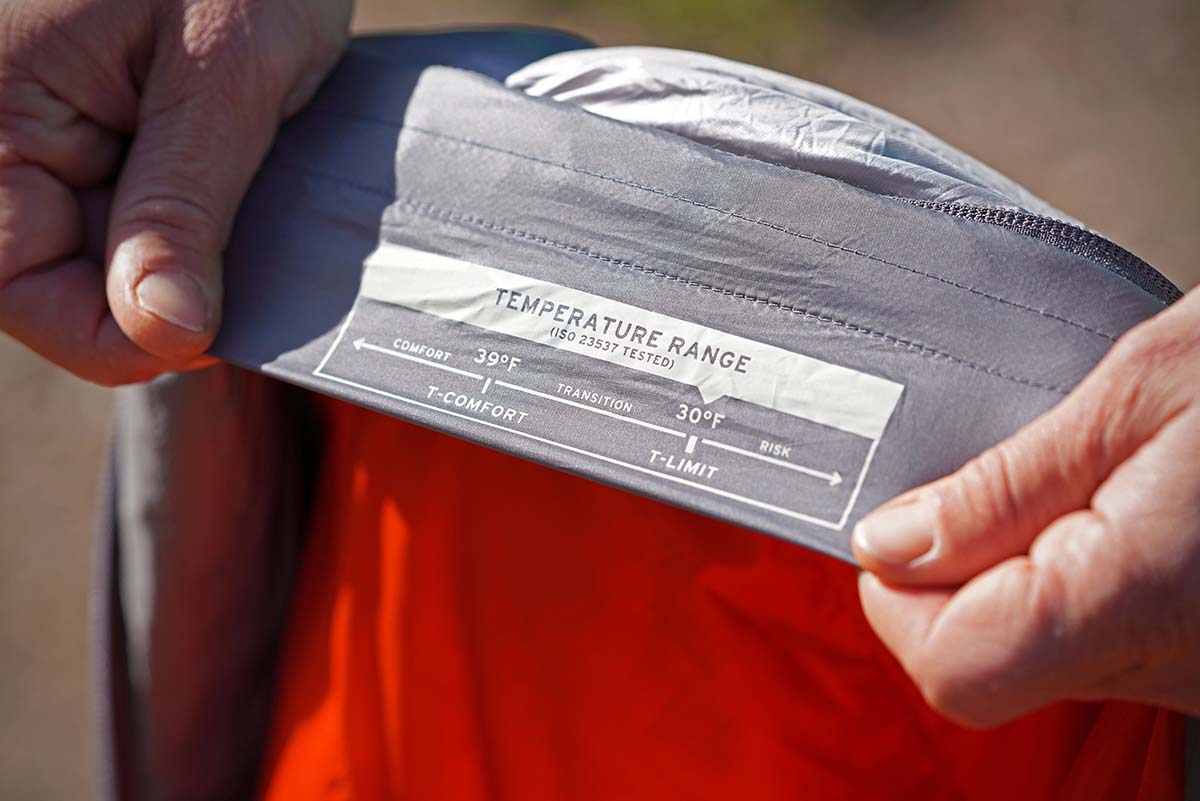
While these ratings serve as helpful guidelines and allow y'all to brand comparisons betwixt bags, they are far from absolute. Subsequently all, comfort is subjective to the sleeper (and also dependent on factors such as purse size, condensation build-up, sleeping pad R-value, and more). If you typically run hot you'll probable be able to get away with a lighter bag, but if you're a common cold sleeper yous'll want something warmer. Regardless of your body'due south tendencies to run hot or cold, it's a good rule of pollex to go with a slightly lower temperature rating than what yous think y'all'll need. For example, if you're planning to camp in near-freezing temperatures, a 20-degree handbag will offer much more assurance than a 30-degree model (recollect, there'due south almost nil worse than shivering in your sleeping bag). If a night is warmer than anticipated, you can ever unzip your bag—just like you throw off the blankets at dwelling house.
Finally, it's important to note that a few sleeping handbag manufacturers, including well-respected cottage brands Feathered Friends and Western Mountaineering, do not use EN or ISO ratings. The major downside here is that this makes information technology hard to compare models, such as deciding betwixt the Feathered Friends Hummingbird 20 and the Therm-a-Residuum Hyperion 20. Still, nosotros practise find that both of these companies are on the conservative side with their ratings and are generally warmer than the contest. For more on warmth and deciding what's right for you, meet our article on sleeping bag temperature ratings.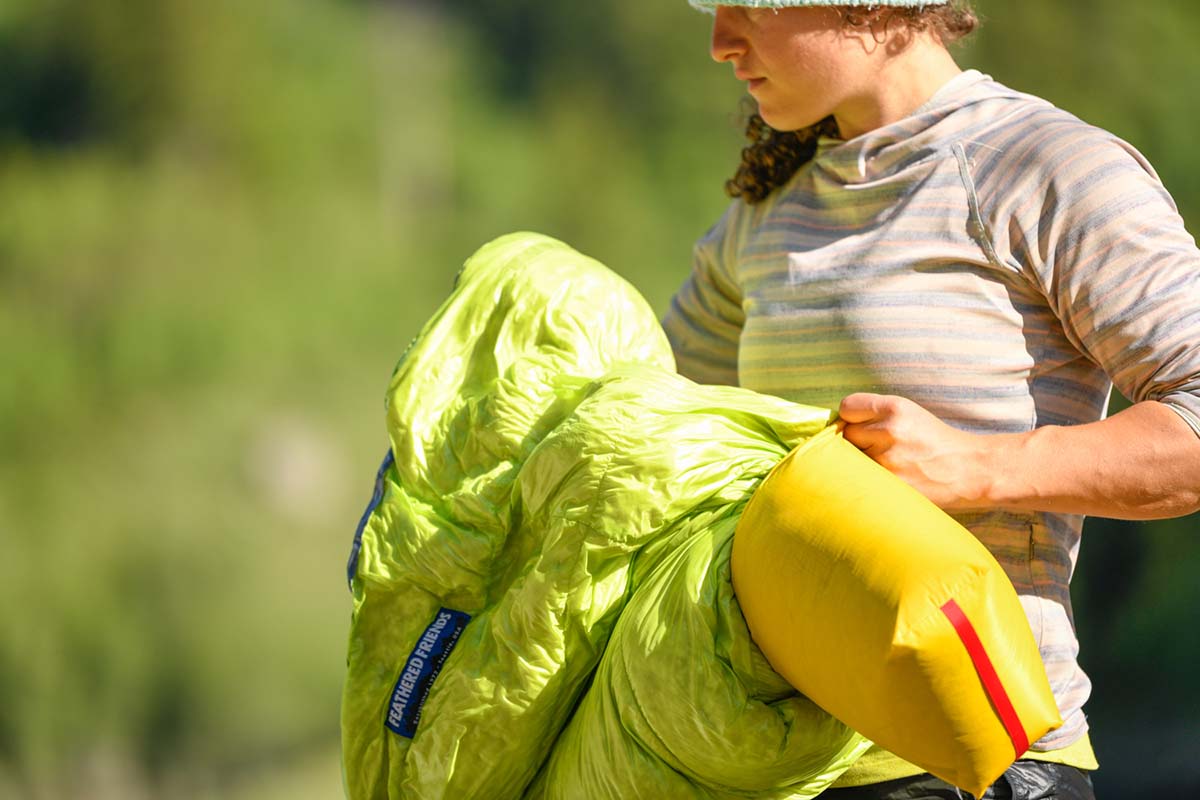
2. Down vs. Constructed Make full
Another important consideration when looking for a sleeping bag is the blazon of fill: down or synthetic. Afterwards all, many other factors involved in choosing a bag—like temperature rating and packability—volition be affected by the insulating material. Down consists of the feathers and plumage institute on geese and ducks (come across our note below about ethically sourced downward), while synthetic fill up is most oft made of polyester. Both materials have their strengths and weaknesses, which nosotros detail beneath.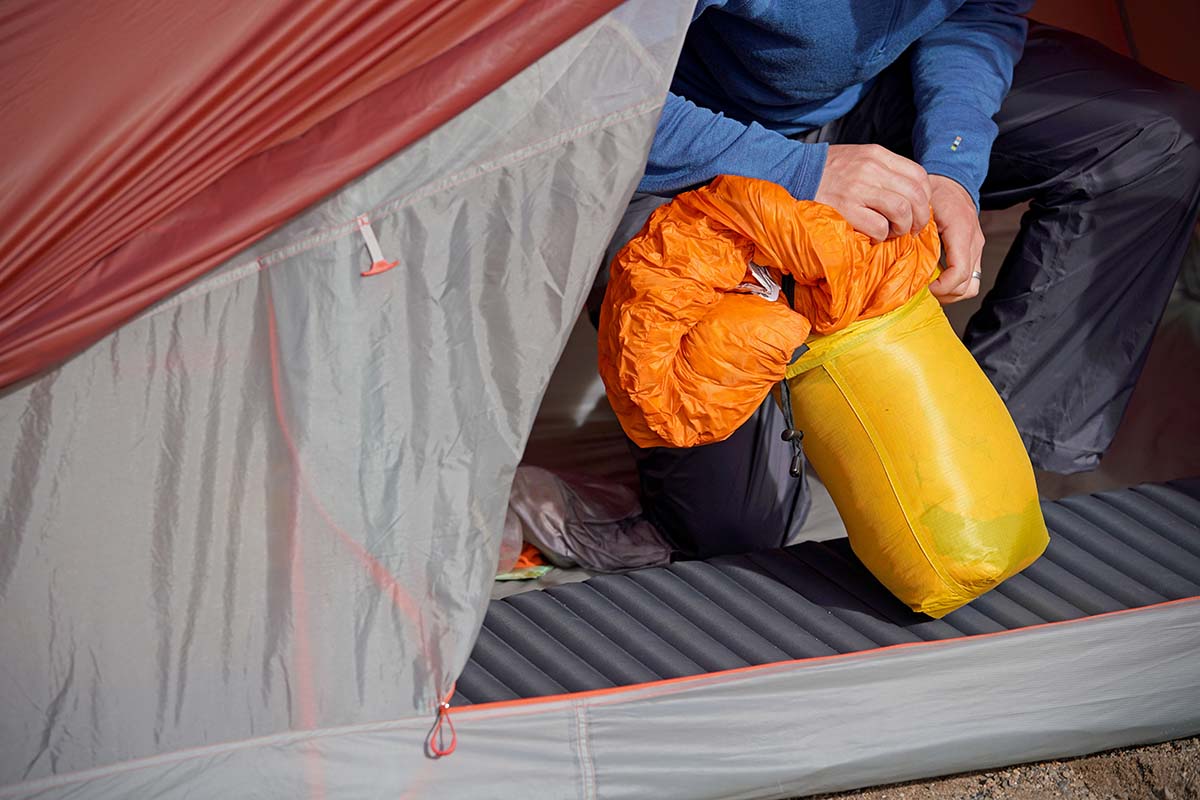
Down is known for its remarkable warmth, low weight, and packability. With its class-leading warmth-to-weight ratio, you get more bang for your buck than with synthetic fill. Down also mostly is more than durable than synthetic (it doesn't pack out every bit easily), and so you lot'll likely get more seasons out of a downwards bag. All the same, in that location are a few caveats to this "miracle" insulator. First and foremost, feathers and plumage grow droopy and lose their loft when wet, and as a outcome are no longer able to trap warm air. Synthetic make full, on the other mitt, stays lofty (and thus continues to insulate) fifty-fifty when wet. Finally, maybe the biggest drawback to down is the cost. Because of its superior functionality and difficulty in sourcing, downwards sleeping bags are more expensive across the board than their synthetic counterparts. For this reason, constructed bags tend to be more pop among casual campers and upkeep-oriented shoppers. Just if you lot prioritize streamlining your pack with minimal weight and majority, a downwardly sleeping bag is difficult to beat. 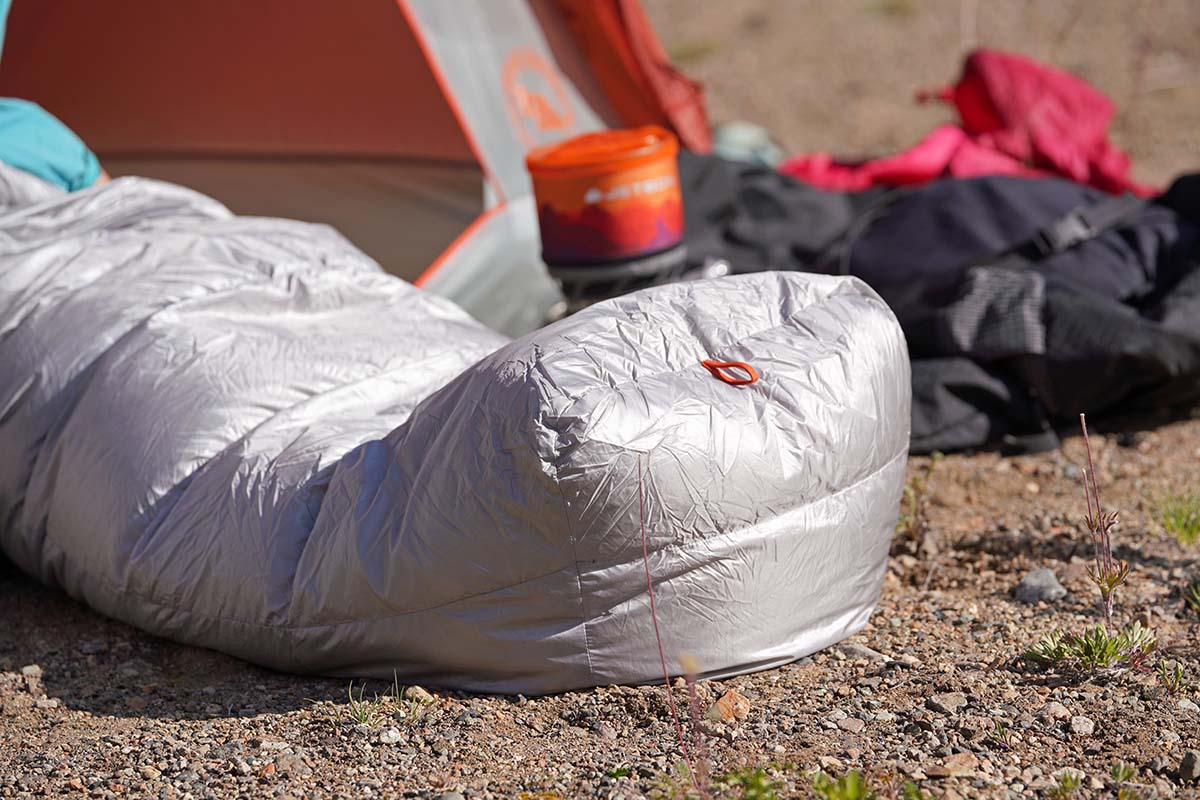
A final note: the sourcing of both down and synthetic materials is currently a topic of ethical and environmental contend. Either way you lot shop, nosotros encourage y'all to look for recycled materials (in the case of both constructed and down), or responsibly sourced down. Programs like the Responsible Downwards Standard (RDS) and Global Traceable Downward Standard (TDS) are in place to ensure the humane treatment of ducks and geese, and thankfully near manufacturers have followed adapt and source just RDS- or TDS-certified down. For more on the debate, see our article on downwards vs. synthetic insulation.
three. Weight and Packability
The weight and packability of your gear is increasingly important the more than serious your adventures get. In general, here's what to expect for in a lighter, more compressible handbag: a high fill power, low denier for the shell fabric, a warm temperature rating relative to the weight, and a mummy shape. For example, the Western Mountaineering HighLight ($360) is an 850-fill downwardly, 35°F mummy bag that weighs just 1 pound. At the other terminate of the spectrum, the budget Teton Sports LEEF costs just $75 but weighs a hefty 3 pounds eight ounces and uses bulkier synthetic make full. Most 3-season down sleeping bags for backpacking are in the 2-pound range or less.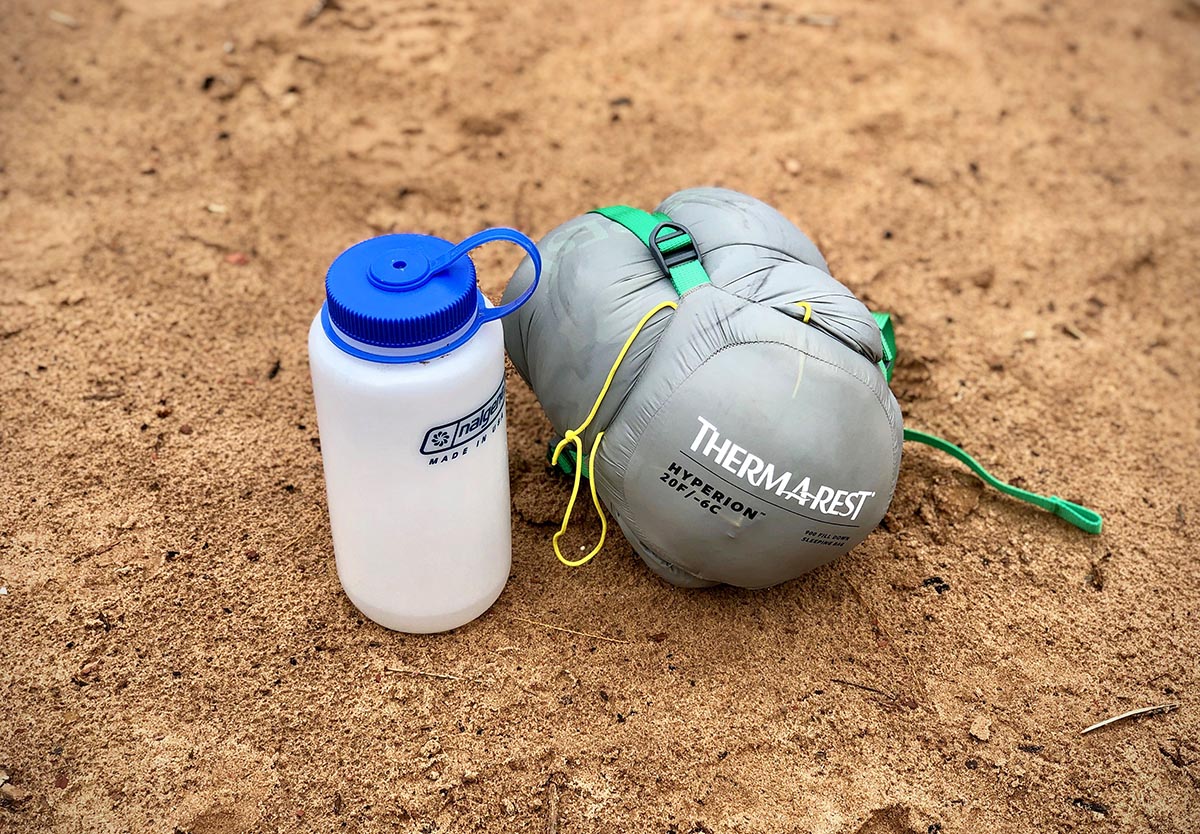
As with most types of backpacking gear, in that location are tradeoffs to going ultralight. Premium bags from brands like Western Mountaineering and Feathered Friends are among the nigh expensive on the market. Further, the thin trounce fabrics brand them more than decumbent to snags and tears, the zippers are frail (and catch easily), and the shape and features ofttimes get minimized to shave ounces. But for serious backpackers who get out a lot and cover basis quickly, the weight savings and packability are well worth these downsides.
four. Trounce Denier and Durability
Another important (but often-overlooked) factor when information technology comes to sleeping bags is their shell denier (D), which indicates the thickness of the outer material. The lower the number, the thinner the shell. Some of our favorite ultralight bags, such as the Feathered Friends Tanager, go all the way down to 7D, which means that you can literally run across the feathers through the outer shell. Many popular backpacking numberless are in the 20-30D range, which is substantially thicker, and some of the burliest models, like the Marmot Trestles, go all the way up to 70D.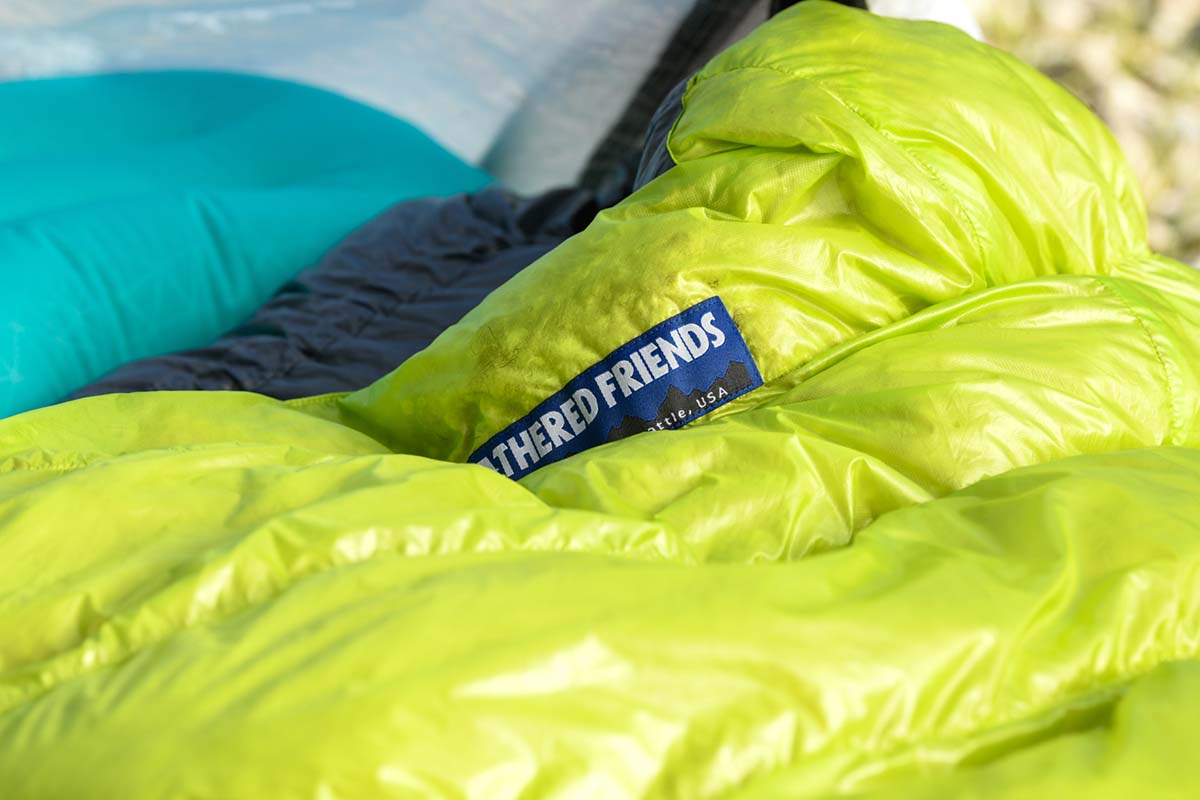
Denier matters nigh for outwear, equally your jacket oft is exposed to the outside world, just much less so with sleeping bags. People ordinarily clamber into their bags on tiptop of sleeping pads and inside tents, making durability less of import. If you have trouble being careful with your gear, regularly bring a dog inside your tent, or are a fan of the cowboy camp (sleeping sans tent, right on the globe and under the stars), it's definitely worth taking a look at the beat out denier earlier yous buy and opting for a thicker, more hardwearing material. If not, going sparse is a bang-up fashion to cut down on weight and packed size.
five. Bag Shape
Sleeping bag shape is some other key factor when information technology comes to weight and packability. A mummy bag is cut to the contours of the human trunk: narrow effectually the feet and legs, wider around the hips and shoulders, and with a hood that wraps around your head to seal in heat. The mummy shape minimizes materials to maximize packability and weight-savings, making it the about pop pick among backpackers. However, if you're a side sleeper or someone who tosses and turns throughout the nighttime, a roomier purse could be a better fit (most manufacturers will list shoulder and hip girths so you can compare bags). And Nemo designs "spoon" bags that feature generous dimensions at the shoulders and knees (like the Nemo Disco thirty). As always, at that place are tradeoffs: roomier numberless will exist heavier than the mummy-shaped contest and have a higher likelihood for drafts and pockets of cold air.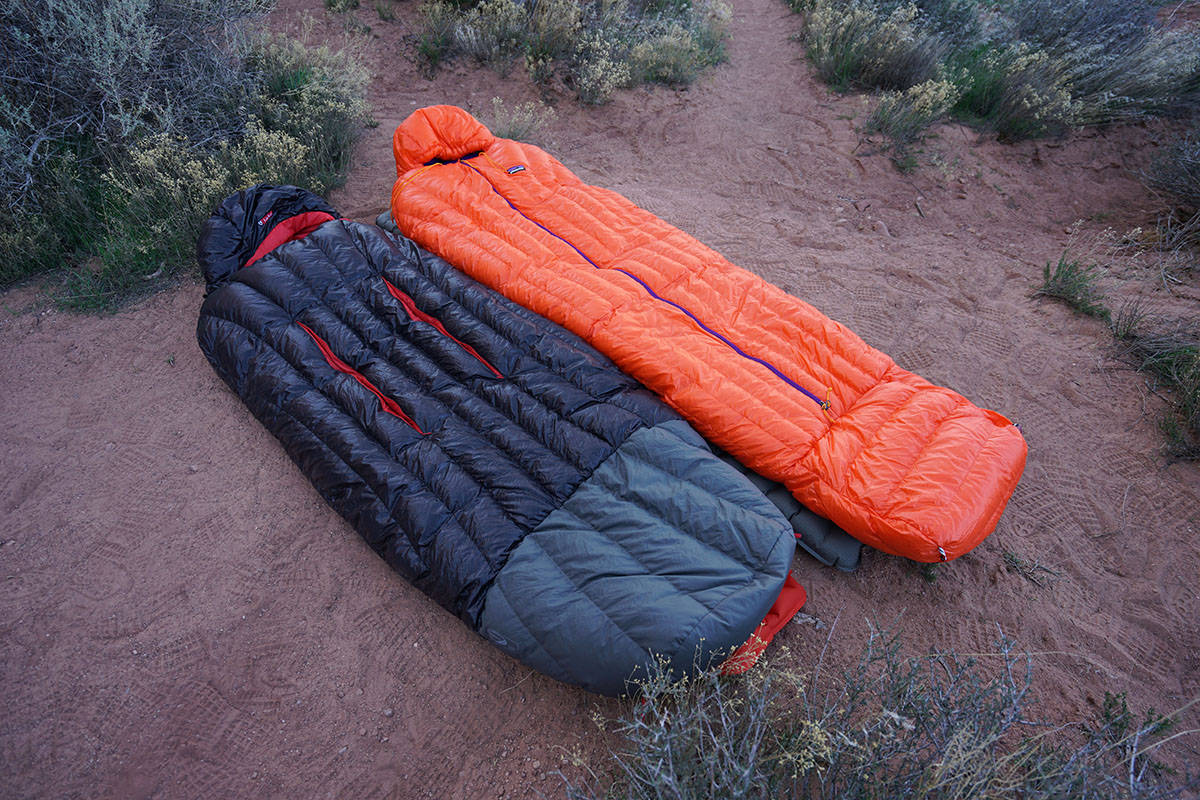
half-dozen. Sizing and Fit
The dimensions of sleeping numberless vary from brand to brand and handbag to bag, though most come up in two to 3 sizes (measured in terms of length) for both men and women. In most cases, the girth of a bag (usually measured at the hips, shoulders, and feet) will increase with the length. Women's sleeping bags are more often than not shorter, wider at the hips, and narrower at the shoulders than men's or unisex numberless (they will likewise be warmer, every bit we mentioned in the "Temperature Ratings" department in a higher place). Although taking close measurements of your body's dimensions can go a long way, the all-time way to ensure the right fit is by going to your local gear shop and testing out a few different bags.
7. What is Fill Power?
When looking at the specs for each down sleeping bag, you will likely see a number relating to fill power, such as "600-make full down" or "850-fill down." Fill power represents how much space 1 ounce of down takes up in a cylindrical tube (i.e. the loft) and generally ranges from effectually 550 on the depression end to 900 at the premium cease, with a higher number representing college-quality downwardly. These feathers volition loft more, and equally a result, they retain rut better, weigh less, and are more compressible. Backpacking sleeping numberless with a higher fill ability will exist more expensive, but they will too be lighter and more packable than bags stuffed with lower-fill-power downwards.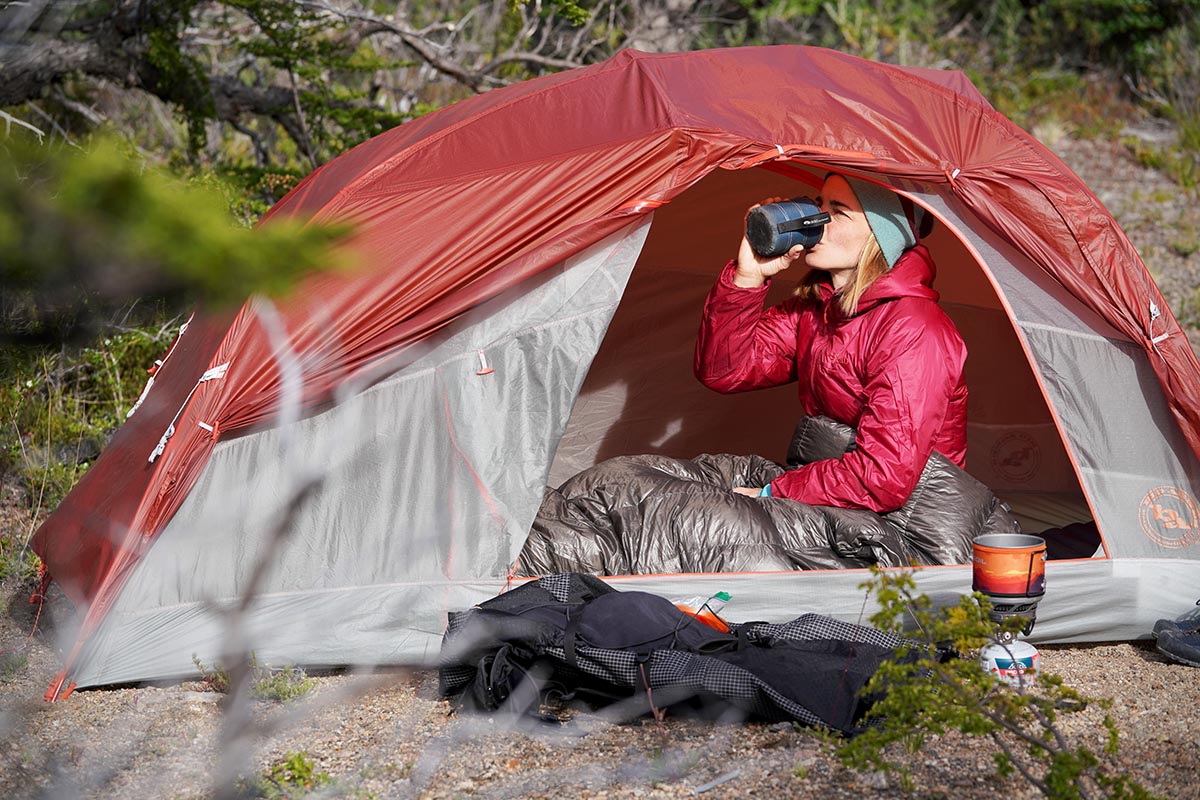
eight. Hydrophobic Down and DWR
As mentioned above, down does non insulate very well when it gets wet. You're in for a rather unpleasant trip if your downwards bag gets soaked and the weather never breaks to fully dry it out. Fortunately, many manufacturers are moving toward hydrophobic downwards. By adding a polymer to the downwards, the fill becomes more water-resistant and less prone to clumping when wet. Although hydrophobic down is a prissy layer of insurance against moisture, it'due south not a perfect solution—proper care should yet be taken to keep your pocketbook dry.
For additional water resistance, manufacturers besides will often care for a sleeping handbag's shell material with a durable h2o repellent (DWR) finish, which causes h2o to bead upward and ringlet off rather than soak through to the down below. Although DWR will not be effective in a true downpour, it is a nice outset line of defense for wet tent floors or sleeping on snow. Finally, proceed in mind that DWR wears off over time, but the coating can be reapplied with a production similar the Nikwax TX.Directly Spray-On Water-Repellent.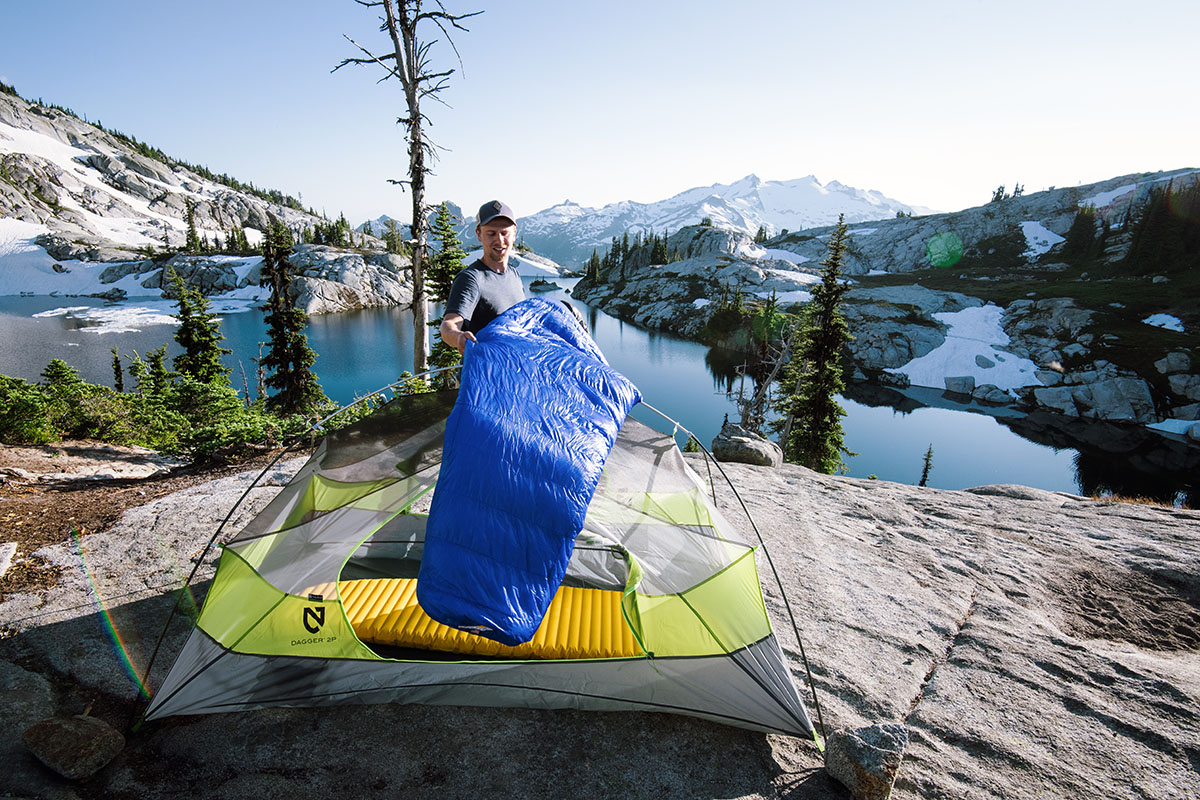
9. Additional Features to Consider
Many of today'southward sleeping bags come with an assortment of boosted features for added comfort and convenience. Some take internal sleeves to insert camp pillows and sleeping pads, keeping your absorber in place throughout the nighttime (one example is the Big Agnes Anvil Horn 15). Others accept a stash pocket somewhere nearly the chest to shop your phone or other valuables. Anti-snag zippers are as well a great way to reduce the annoyance of naught-snags and increase the longevity of your pocketbook. Keep in listen that each of these additional features volition come up at a small weight penalty, so you lot'll accept to consider your priorities.
10. Cost
The cost of backpacking sleeping bags varies widely, with upkeep models dipping beneath $100 and loftier-end down numberless reaching all the way into the high hundreds. The more expensive bags tend to have lighter weights, higher make full powers, and lower temperature ratings (i.eastward. more warmth for less weight). Just the adept news is that you don't have to suspension the bank to get a quality bag. The Kelty Cosmic twenty, for example, is on the lower cease of the cost spectrum at $170, but it's a quality choice rated downward to nineteen°F, which will be plenty in most iii-flavour conditions. The savings come from its 600-fill-ability down, which is a little heavy and bulky, but at two pounds half-dozen ounces won't counterbalance yous down too much.
11. Hoodless, Half Zips, and Zipperless Bags
In the ongoing endeavour to create the lightest gear possible, manufactures accept toyed with removing key sleeping bag features such as zippers and hoods. Many ultralight sleeping bags feature partial-length zippers, while others jettison the zipper and hood altogether for ultralight optimization (such as the i-pound-two.half dozen-ounce Feathered Friends Tanager 20). The benefit is obvious, but there are a number of drawbacks in versatility and comfort. First, a half-zip or zipperless bag won't be able to ventilate like a total-nada bag, making it specially sweaty and uncomfortable on warm nights. Second, although most will pair a hoodless purse with a down jacket or beanie, yous'll inevitably experience a drib in warmth and coziness. All in all, we recommend these options only for the nigh weight-conscious of backpackers.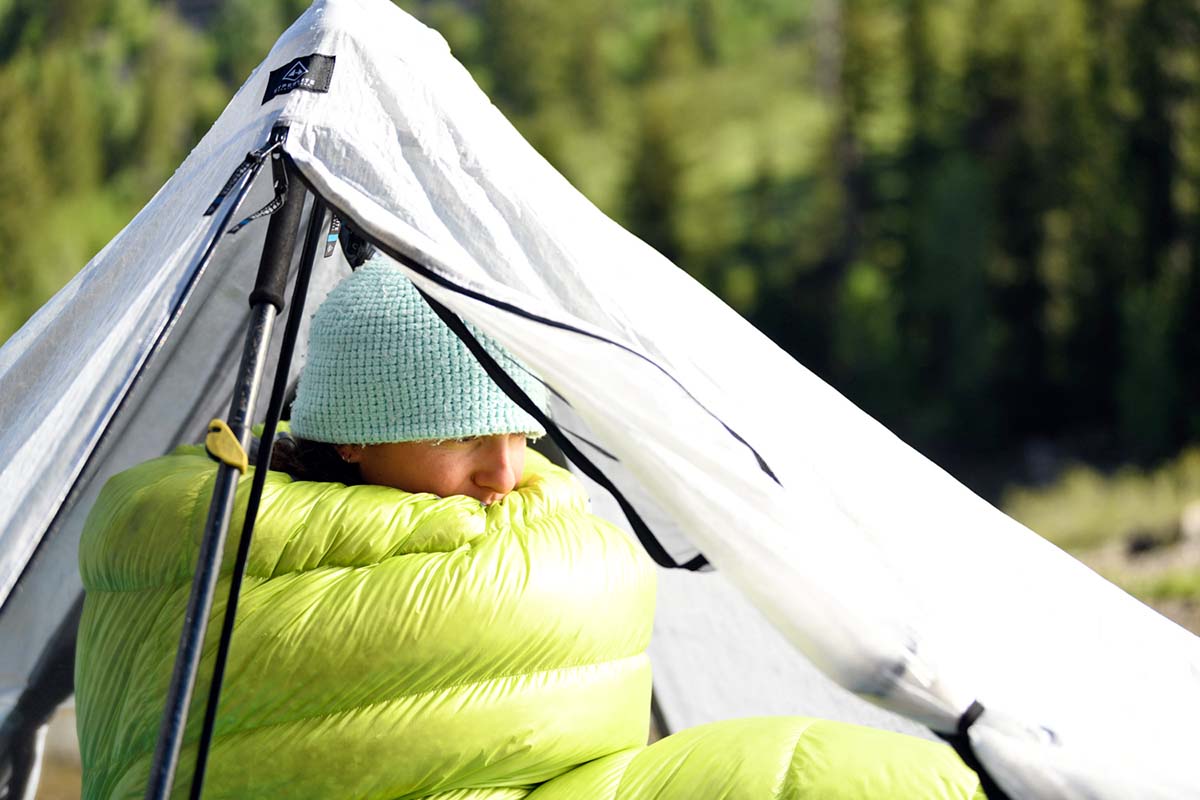
12. What Nigh Sleeping Quilts?
This article covers sleeping numberless, which are by far the most popular option for backpackers in 2020. However, it'due south worth noting that ultralighters have largely turned to lightweight sleeping quilts. Here's our accept: quilts, similar hoodless and zipperless bags, offer weight savings but come with a number of compromises, including less warmth overall, increased draftiness, lower levels of comfort as you lot have to slumber directly on your pad, and a more arduous set-up process. For mid-summer outings in warm climates similar the Appalachian Trail, we tin see the depict. But for almost people and uses, we'd take a lightweight mummy or even a hoodless handbag any day. For more on the topic, see our article on sleeping bags vs. quilts.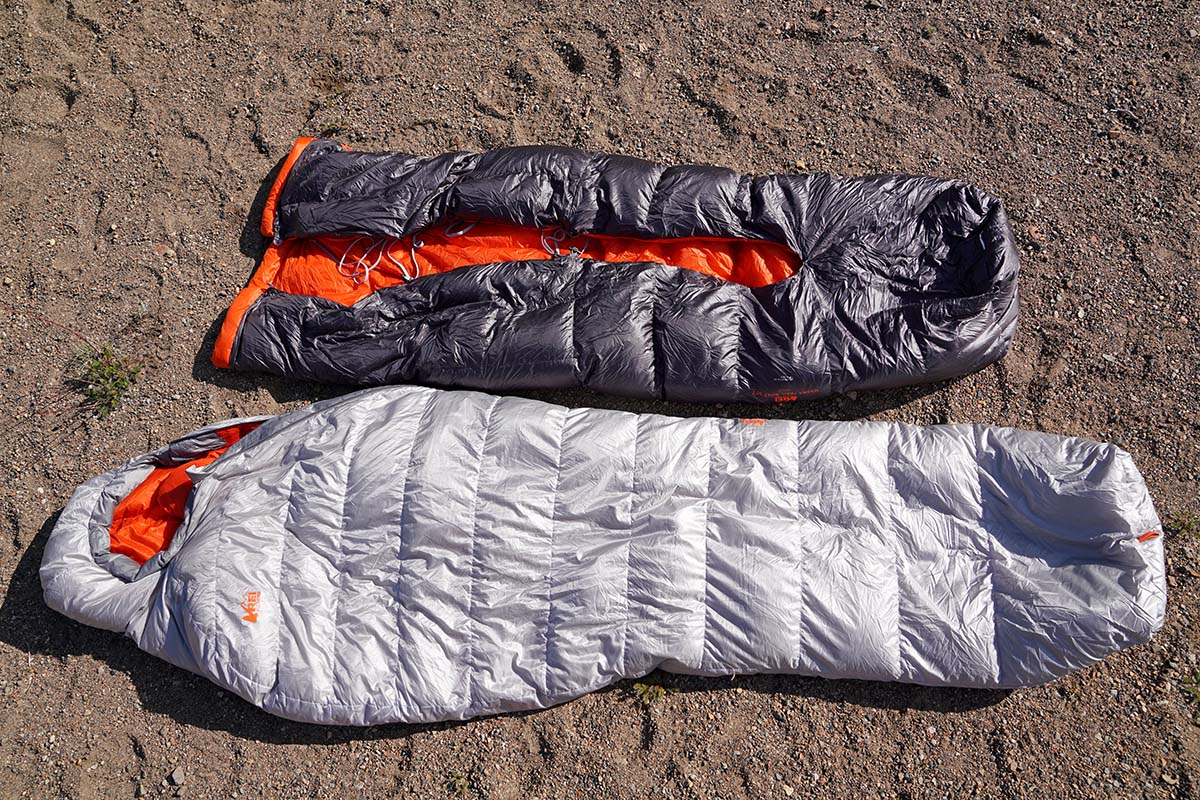
13. Our Top Backpacking Sleeping Bag Picks
Now that you lot're up to speed on what to look for, it's fourth dimension for the fun part: selecting the ideal sleeping bag for your backpacking adventures. We cover all of our top picks in our articles on the best backpacking sleeping bags and the best ultralight sleeping bags and quilts, but below are some of our favorites broken down into key categories. Finally, if yous're a more casual motorcar camper, bank check out our article on the best camping ground sleeping bags.
Best Overall Sleeping Bag: REI Co-op Magma xv
All-time Budget Sleeping Bag: The North Face Furnace 35
Best Ultralight Sleeping Bag: Feathered Friends Hummingbird UL 30
Best Sleeping Handbag for Side Sleepers: Nemo Disco 30
Best Ultralight Sleeping Quilt: Enlightened Equipment Enigma
See Our Backpacking Sleeping Handbag Picks See Our Ultralight Sleeping Bag and Quilt Picks
Source: https://www.switchbacktravel.com/how-to-choose-backpacking-sleeping-bag
0 Response to "What to Look for in a Backpacking Sleeping Bag"
Post a Comment